- Detergent residue (especially if you use too much),
- Fabric softener, which coats fibers with a waxy layer,
- Body oils and dead skin.
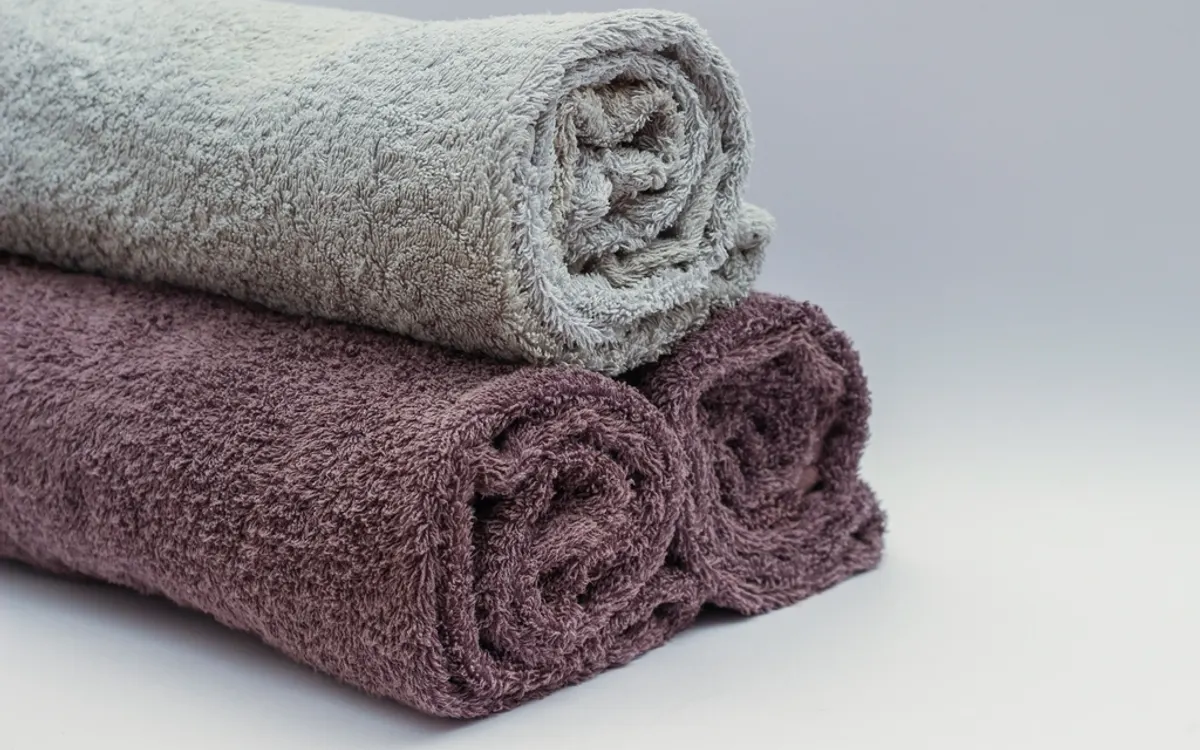
That buildup traps water and feeds bacteria. When the towel is dry, the bacteria are quiet. When it gets warm and damp, they wake up, and so does the smell. Washing on top of the buildup does not remove it, so you need to strip the towels first.
Step 1: A hot vinegar wash
Put the towels in the machine (do not overstuff it; they need room to move). Set the hottest water your towels’ label allows and the longest cycle. Add 1 cup of white vinegar, no detergent, no softener. Vinegar dissolves soap and mineral residue and kills a lot of the odor-causing bacteria.
Step 2: A hot baking soda wash
Without drying them, run the towels again on hot, this time with 1/2 cup of baking soda, again with no detergent. Baking soda loosens the remaining grime and neutralizes odors.
Keep them separate: mixed together, vinegar and baking soda mostly cancel each other out.
Step 3: Dry them completely
If the dryer takes two cycles to dry towels, the vent is probably clogged: check the dryer vent warning signs.
Tumble dry until completely dry, or hang them in direct sun, which is a natural odor killer. Damp towels folded into a cupboard will smell again in days.
Still smelly?
- Check the machine. If your washer itself is dirty, it will reinfect every load. Here is how to clean a smelly washing machine, and the fix for black mold in the door seal.
- Soak first. For very bad towels, soak for an hour in hot water with an oxygen bleach powder (sodium percarbonate), following the label, then do the steps above. Do not add vinegar to the oxygen bleach soak.
- White towels: a normal wash with chlorine bleach according to the bottle can help, on its own and never in a load with vinegar.
How much detergent towels really need
Most people use too much. Modern HE detergents are concentrated, and towels hold on to whatever the rinse does not remove.
| Load | Liquid detergent (HE) | Pods | Liquid softener |
|---|---|---|---|
| Normal load of towels, soft water | Line 1 on the cap | 1 | None |
| Normal load, hard water | Line 1–2 | 1 | None |
| Very dirty (gym, beach, pets) | Line 2–3 | 1 (2 only if the box says so) | None |
| Small load | Half the line 1 dose | Do not cut pods; wash a fuller load | None |
These are guidelines; the dose lines on your bottle are the real reference. If you see suds left in the drum at the end of a cycle, you are using too much.
The full strip, for towels that are years old
If the two-wash method did not fully work, the towels may have a thick layer of old detergent and softener. A deeper strip:
- Wash the towels on hot with your normal detergent, then dry them.
- Soak them in a bathtub or large bucket with hot water and an oxygen bleach powder (sodium percarbonate) following the label, for 4 to 6 hours. Stir now and then. The water often turns gray: that is the buildup coming out.
- Drain and rinse in the washer on a rinse-and-spin cycle with no products.
- Wash once more on hot with 1 cup of white vinegar and no detergent.
- Dry completely, ideally in the sun.
Do not combine the oxygen bleach soak with vinegar or chlorine bleach. One product per step, with rinses in between.
Cotton, bamboo, microfiber: care differences
| Towel type | Water temperature | Avoid | Notes |
|---|---|---|---|
| Cotton (most bath towels) | Warm to hot | Liquid softener | Can handle the vinegar strip |
| Egyptian or Turkish cotton | Warm | Heavy detergent | Loses absorbency with softener buildup |
| Bamboo blends | Warm | Chlorine bleach | Check the label; dry on medium |
| Microfiber | Warm | Softener, dryer sheets | Wash separately; softener clogs the fibers |
| Linen | Warm | Overdrying | Gets softer with each wash |
Why towels stop absorbing
A towel that pushes water around instead of soaking it up almost always has a coating. Softener and dryer sheets leave a waxy film on purpose (that is what makes them feel soft). The same film repels water. Two vinegar washes usually bring absorbency back; if not, use the full strip above.
Drying matters as much as washing
- Do not overload the dryer. Towels need room to tumble.
- Clean the lint screen every load. ENERGY STAR calls it an important safety measure, and a clogged screen leaves towels damp in the middle. If loads still take two cycles, check the dryer vent warning signs.
- Line drying: spread towels out flat on the line or rack; folded over a single bar, the middle stays damp.
- In humid weather, finish line-dried towels with 10 minutes in the dryer.
Common mistakes
- Leaving wet towels in a pile on the floor or in the hamper. Hang them first, even if they are going straight to the wash.
- Washing towels with jeans or zippers: extra friction causes pilling and pulls loops.
- Using bath towels for more than 3–4 uses in a humid bathroom. See our how often to wash everything chart.
- Folding towels warm and slightly damp straight into a closed cupboard.
FAQ: quick answers
Will vinegar make my towels smell like vinegar? No. The smell rinses out in the final rinse and is gone once they are dry.
Can I use vinegar in the softener cup every wash? Many people do, at about 1/2 cup. Some washer manufacturers advise against frequent vinegar because of the rubber seals, so check your manual. And never in a load with chlorine bleach.
How long do towels last? With good care, cotton bath towels commonly last a few years. When they are thin, frayed or never smell fresh even after a full strip, retire them as cleaning rags.
What the smell is telling you
| Smell | Most likely cause | Fix |
|---|---|---|
| Musty, “wet basement” | Towels stayed damp too long; mildew in the fibers | Two-wash strip, then dry fully |
| Sour, vinegary, only when wet | Bacteria living in detergent and softener buildup | Two-wash strip; cut detergent and softener |
| Perfume over something bad | Scent boosters masking buildup | Stop scent boosters; strip |
| Same smell on all laundry | The washing machine itself | Clean the washer first |
| Smoky or burnt after drying | Lint buildup or dryer problem | Stop using the dryer; check the vent |
A case with numbers: what softener costs you
Say you wash towels twice a week: about 104 loads a year. A typical 60-something-load bottle of liquid softener costs roughly $8 to $12 at US supermarkets, so softening every towel load costs around $13 to $20 a year, and it is the main thing making the towels less absorbent. A set of wool dryer balls costs about the same as one bottle and is reused for years. Skipping softener on towels saves money and fixes the smell at the same time. (Prices vary by store and brand; check your own receipt.)
Front loader or top loader: towel tips
Front loaders use less water, so towels need a measured detergent dose and an extra rinse if you have sensitive skin or hard water. Leave the door open afterward; a front loader that stays closed is the most common source of musty towels.
Top loaders with an agitator handle bulky towel loads well but can tangle long towels; do not overfill past the top row of holes. If your top loader has a “deep water” or “extra rinse” option, towels are the load to use it on.
Keep towels fresh
- Use less detergent. Half to two-thirds of the recommended amount is often plenty for towels.
- Skip liquid fabric softener. It is the number one reason towels stop absorbing and start smelling. Use wool dryer balls instead.
- Hang towels spread out after use, not folded on a hook or tossed on the floor.
- Wash bath towels every 3 or 4 uses, and wash them hot.
- Take them out of the washer right away. Wet towels sitting for hours start to smell immediately.
- Do the vinegar strip every month or two, before the smell comes back.
As a bonus, towels without softener buildup are fluffier and actually absorb water again.
FAQ
Why do towels smell bad when they get wet?
Bacteria living in buildup from detergent, softener and body oils. Dry, they seem fine; once warm and wet, the bacteria become active and release the musty smell.
Can I put vinegar and baking soda in the same load?
It is better not to. They neutralize each other and lose most of their cleaning power. Use them in two separate washes.
Sources
Always follow the label on your product. Labels are the legal use instructions in the US.
Save this for cleaning day. Pin it so you can find it later.
Save to Pinterest Read next How to Remove Hard Water Stains From Shower Glass (Without Scrubbing for an Hour)